A 20-yard container functions as the standard workhorse for home renovations across Wake County. Measuring approximately 22 feet long, 8 feet wide, and 4.5 feet high, this unit accommodates roughly 110 to 130…
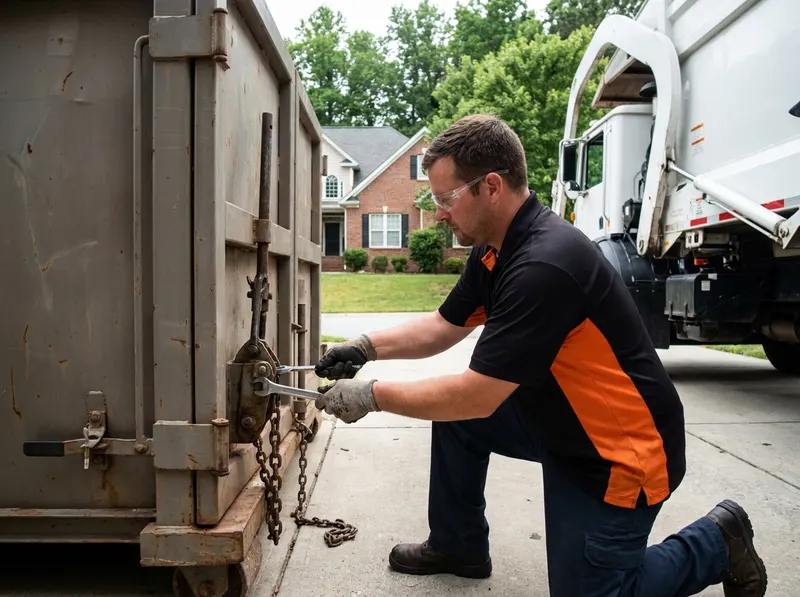
A 20-yard container functions as the standard workhorse for home renovations across Wake County. Measuring approximately 22 feet long, 8 feet wide, and 4.5 feet high, this unit accommodates roughly 110 to 130 thirty-three-gallon trash bags, which equals about 8 full standard pickup truck beds. Homeowners tackling multi-room cleanouts along Glenwood Avenue or kitchen gut jobs in historic properties near Mordecai and Historic Oakwood rely on this volume because it manages long framing studs and bulky cabinet runs without debris protruding above the container walls. For properties with steep grades or tight driveways in Five Points and Boylan Heights, protective wood blocking goes beneath the steel wheels to prevent asphalt depressions or cracked concrete pavers during loading. The 4.5-foot sidewall height allows easy over-the-side disposal for heavy plaster, while the rear swing-door opens flat for walk-in access with wheeled wheelbarrows full of mortar and drywall scraps.
Selecting container capacity requires balancing physical space against weight thresholds. If a project involves a simple 40-square-foot half-bath tear-out, a smaller 10-yard bin prevents paying for unneeded space; if the job entails a complete subfloor reconstruction, a 2,500-square-foot roofing tear-off, or structural wall removals, a 30-yard box avoids overflow penalties. Remodeling debris is exceptionally dense, meaning a 20-yard box loaded past its 3-ton allotment with masonry or ceramic tile incurs Wake County transfer station overweight fees, usually billed at $65 to $85 per excess ton. City of Raleigh curbside collection limits bulky residential pickups to small bundles and prohibits loose building materials outright, leaving self-contained roll-off drop-offs as the primary compliant path for construction site refuse.
Preparing a property for drop-off requires approximately 60 feet of straight-line clearance for the roll-off truck to back into position safely. Delivery requires clear overhead space free of low-hanging oak limbs and utility wires, particularly on older residential streets in Cameron Village and South Park. Low-clearance cul-de-sacs in suburban developments like Wakefield, Hedingham, and Brier Creek require pre-clearing street-parked vehicles to provide the 10-wheel truck adequate turning radius. Step one involves booking drop timing and identifying the target placement spot; step two involves placing wooden driveway shields directly beneath the contact points; step three involves loading materials evenly across the floor; and step four involves calling (984) 254-0018 to schedule prompt removal before finish contractors arrive.
Every job gets a firm, written price after a free on-site visit.
Tell us about your 20-yard remodeling waste hauling job in Raleigh and we'll send a clear, written quote, usually the same day.
 Bear Creek Dumpster Rental